L’inizio del Natale: l’Immacolata · lettura C1
Lettura · Level C1 · Immacolata
A dogma, a ladder and a Christmas tree: the real story of December 8, in advanced Italian.
You’ll read a short C1 article about the Immacolata: what it really celebrates, how Rome marks it, and why some Italians question it. Warm up with the pictures first.
🎄 Warm-up: match the pictures
Choose the Italian word for each picture, then press Check.
8 pictures · 8 words
What is it in Italian?
1. 
2. 
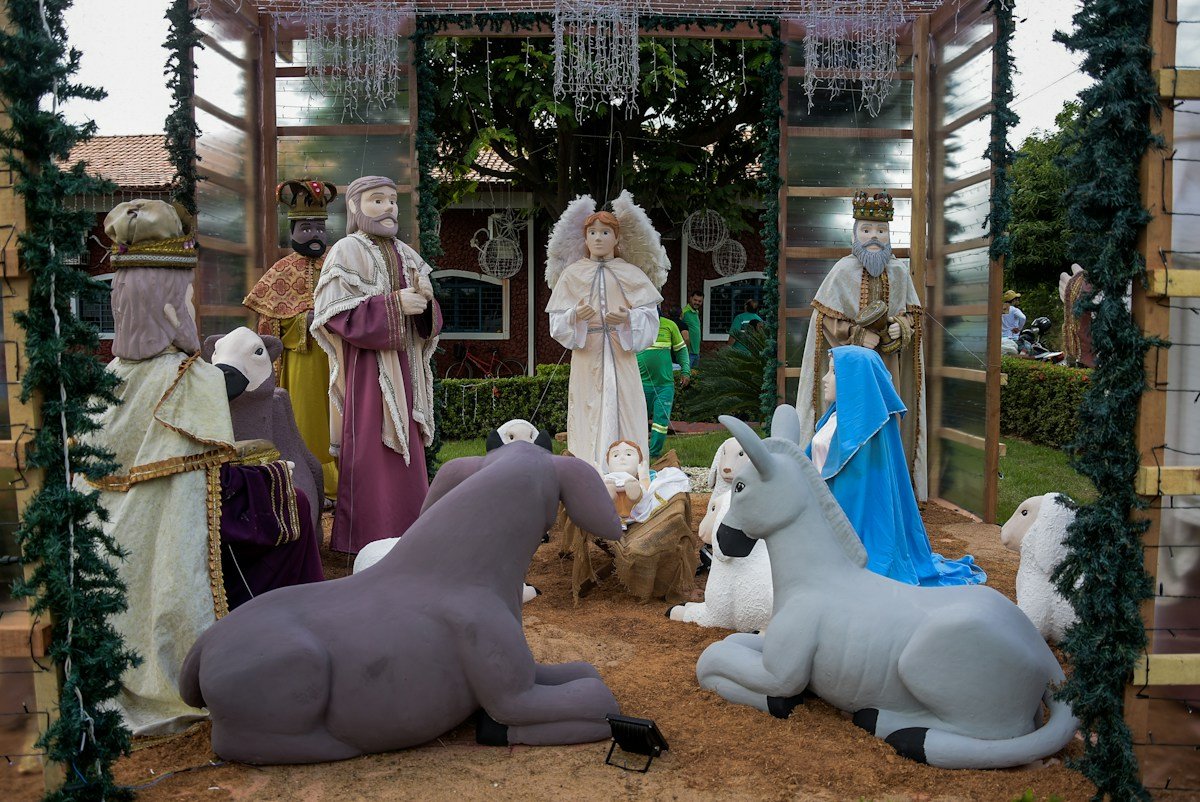
3. 
4. 
5. 
6. 
7. 
8. 
L’inizio del Natale: l’Immacolata
L’8 dicembre l’Italia si ferma: scuole e uffici restano chiusi per la festa dell’Immacolata Concezione, che per molti segna l’inizio ufficiale del periodo natalizio. Eppure, se si chiede che cosa si celebri esattamente, non pochi rispondono con sicurezza e, con altrettanta sicurezza, sbagliano.
Il dogma, proclamato da papa Pio IX nel 1854, è la dottrina secondo cui Maria fu concepita senza il peccato originale. Non riguarda, dunque, la nascita di Gesù da una madre vergine, con cui viene spesso confuso: la «concezione» in questione è quella di Maria, non quella di suo figlio. Un equivoco tanto diffuso quanto curioso, in un Paese di tradizione cattolica.
A Roma la giornata segue un rituale preciso. Al mattino i vigili del fuoco salgono su un’altissima scala e depongono una corona di fiori sul braccio della statua della Vergine, collocata nel 1857 in cima a una colonna a pochi passi da piazza di Spagna. Nel pomeriggio arriva il papa, che rende omaggio alla statua: una consuetudine inaugurata da Pio XII nel 1953 e rispettata ancora oggi.
Nelle case, intanto, si apre la stagione delle decorazioni. Per tradizione è il giorno in cui si fanno l’albero e il presepe, e chi può approfitta del ponte per il primo giro di acquisti natalizi. Le città accendono le luminarie, i mercatini aprono i battenti e le vetrine si riempiono di panettoni. Che si sia credenti o no, l’8 dicembre funziona come un segnale condiviso: da qui in avanti, è Natale.
Non mancano, tuttavia, le voci critiche. In uno Stato laico e in una società sempre più plurale, c’è chi si chiede se abbia senso che una ricorrenza religiosa determini un giorno festivo per tutti, e chi propone di affiancarle festività civili. Altri replicano che queste date sono ormai patrimonio culturale, prima ancora che religioso. Ciononostante, nessuno sembra disposto a rinunciare a un giorno libero alle soglie dell’inverno.
Forse è proprio questa la forza dell’Immacolata: una festa di cui molti ignorano il significato teologico, ma che quasi tutti riconoscono non appena compare la prima pallina sull’albero.
Glossario
- il dogma · dogma, official doctrine
- concepire · to conceive
- il peccato originale · original sin
- confondere · to confuse, mix up
- l’equivoco · misunderstanding
- deporre · to lay, place (solemnly)
- rendere omaggio · to pay homage
- la consuetudine · custom, practice
- il ponte · long weekend (“bridge”)
- lo Stato laico · secular state
- la ricorrenza · anniversary, holiday
- ciononostante · nevertheless
Mostra la traduzione · Show the English translation
On December 8 Italy stops: schools and offices close for the Feast of the Immaculate Conception, which for many marks the official start of the Christmas season. And yet, if you ask what exactly is being celebrated, quite a few people answer confidently and, just as confidently, get it wrong.
The dogma, proclaimed by Pope Pius IX in 1854, is the doctrine according to which Mary was conceived without original sin. It is not, then, about Jesus being born of a virgin mother, with which it is often confused: the “conception” in question is Mary’s, not her son’s. A misunderstanding as widespread as it is curious, in a country with a Catholic tradition.
In Rome the day follows a precise ritual. In the morning, firefighters climb a very tall ladder and lay a wreath of flowers on the arm of the statue of the Virgin, placed in 1857 on top of a column a few steps from Piazza di Spagna. In the afternoon the Pope arrives and pays homage to the statue: a custom begun by Pius XII in 1953 and still observed today.
At home, meanwhile, the decorating season opens. By tradition it is the day the tree and the nativity scene go up, and those who can take advantage of the long weekend for their first round of Christmas shopping. Cities switch on their street lights, Christmas markets open and shop windows fill up with panettoni. Believers or not, December 8 works as a shared signal: from here on, it’s Christmas.
There are, however, critical voices. In a secular state and an increasingly plural society, some wonder whether it makes sense for a religious occasion to set a public holiday for everyone, and some propose adding civic holidays alongside it. Others reply that these dates are by now cultural heritage, even before being religious. Nevertheless, nobody seems willing to give up a day off on the threshold of winter.
Perhaps this is precisely the strength of the Immacolata: a holiday whose theological meaning many people don’t know, but which almost everyone recognizes as soon as the first ornament appears on the tree.
📖 Hai capito? · Did you understand?
Four questions on the reading.
Comprensione · 4 questions
Scegli la risposta giusta.
1. Che cosa afferma il dogma dell’Immacolata Concezione?
2. Chi depone la corona di fiori sulla statua?
3. Da quando il papa rende omaggio alla statua?
4. Che cosa si chiedono i critici?
Read the story of the Immacolata in English →
Want to talk about the Immacolata in Italian? New here? Try a 25-minute lesson for $25: book a trial.
Buona festa dell’Immacolata! E adesso, facciamo l’albero.
Happy Feast of the Immaculate Conception! And now, let’s put up the tree.

Written by Luciana
Native Italian teacher, CEDILS certified, 10,000+ lessons since 2020.