C’è and Ci Sono in Italian: There Is, There Are
A1 · C’è and ci sono
Every town has a bar. Most have a pharmacy. Now you can say so.
Quick answer
“There is” in Italian is c’è (cheh): C’è un bar. “There are” is ci sono (chee SOH-noh): Ci sono due bar. Negative: non c’è / non ci sono. Question: C’è una farmacia qui vicino? Short answers: Sì, c’è · No, non c’è.
C’è: there is (one thing)
One thing in the picture? Say c’è. It sounds like “cheh”, and it’s short for ci è.
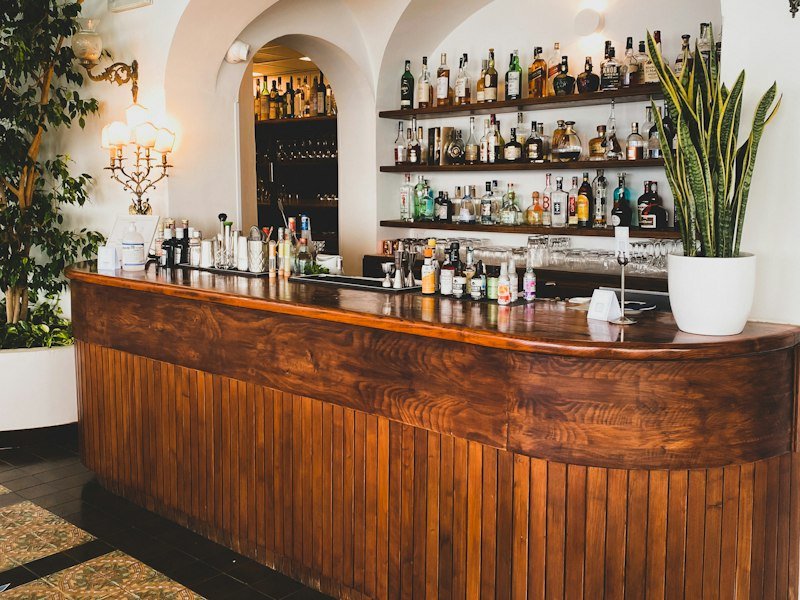
C’è un bar.
cheh oon BAHR
There is a café. (In Italy a bar is a coffee bar.)
Town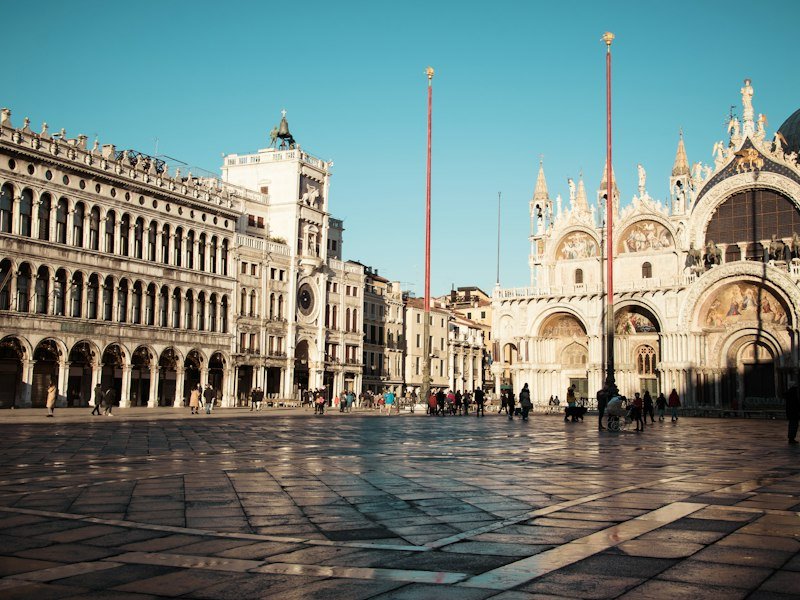
C’è una piazza.
cheh OO-nah PYAHT-tsah
There is a square.
Town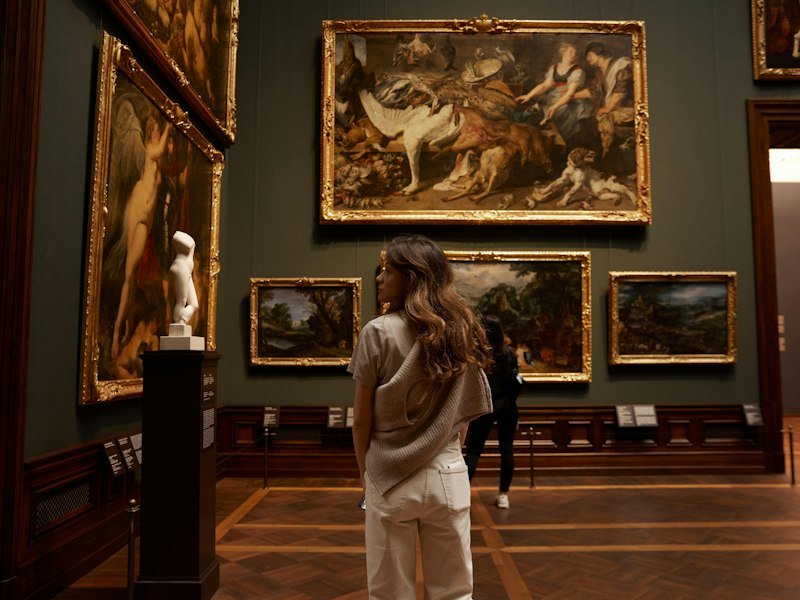
C’è un museo.
cheh oon moo-ZEH-oh
There is a museum.
Town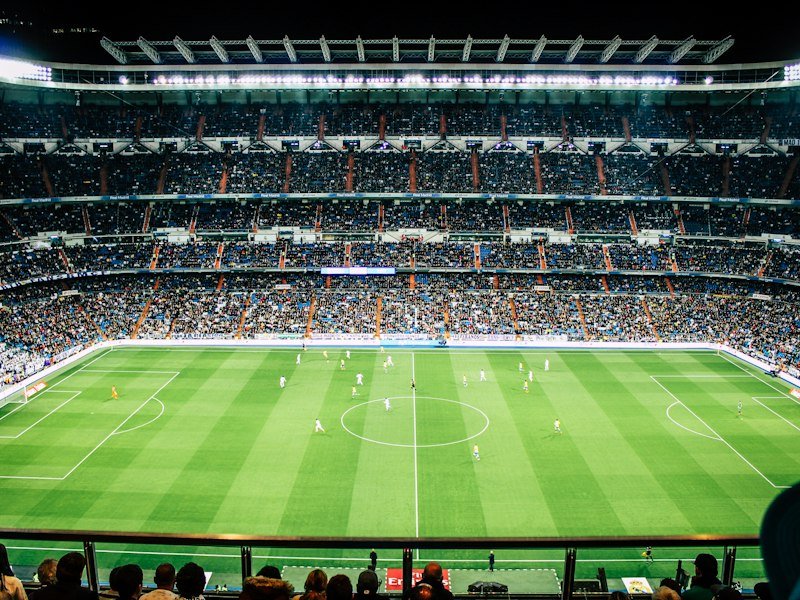
C’è uno stadio.
cheh OO-noh STAH-dyoh
There is a stadium.
Town💡 In simple words
Learn every place with its little word: un bar, una piazza, uno stadio.
Don’t worry about why it’s un, una or uno yet. Just learn it as one block, like a phone number.
Swap the place:
In centro c’è una chiesa.
Downtown there is a church. Try: un ristorante (oon ree-stoh-RAHN-teh) · una banca (OO-nah BAHN-kah, a bank) · un parco (oon PAHR-koh, a park) · una stazione (OO-nah stah-TSYOH-neh, a station) · un supermercato
All 12 places, with their plurals: places in town in Italian.
Ci sono: there are (two or more)
Two or more things? Switch to ci sono. Numbers from A0 fit right in.
☝️ One thing → c’è
C’è un bar.
There is a café.
C’è un museo.
There is a museum.
✌️ Two or more → ci sono
Ci sono due bar.
chee SOH-noh DOO-eh bahr · There are two cafés.
Ci sono tre musei.
There are three museums.

one thing → c’è
C’è un caffè.
There is a coffee.
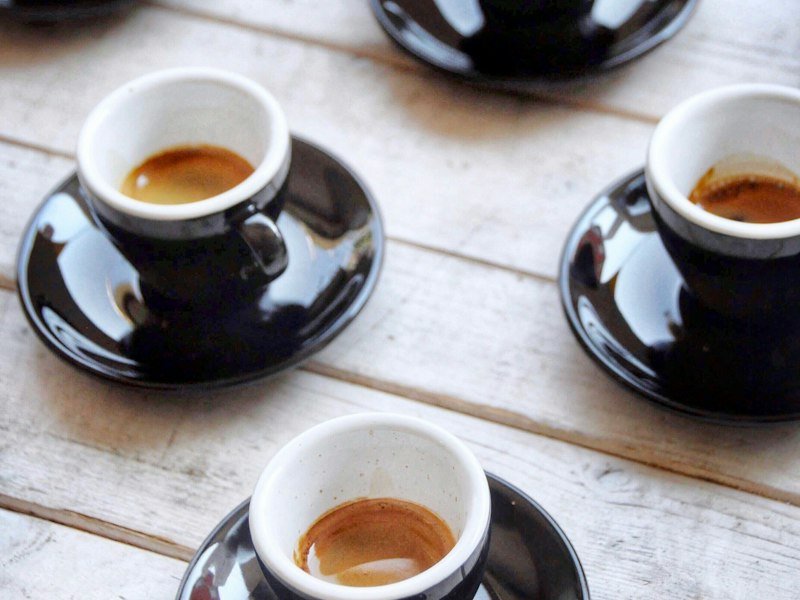
two or more → ci sono
Ci sono tanti caffè.
There are lots of coffees.
The rule
c’è + one thing · ci sono + two or more
Look at the thing after it. One? c’è. More? ci sono. Easy as uno, due, tre.
More examples: Ci sono tanti turisti. (There are many tourists.) · Ci sono venti ristoranti. (There are twenty restaurants.) · Ci sono un bar e una farmacia. (There are a café and a pharmacy: two things, so ci sono!)
💡 Tanti, tante
Tanti or tante = many. It copies the thing, like a color:
tanti + masculine: tanti bar, tanti turisti · tante + feminine: tante case, tante persone.

Non c’è, non ci sono: there isn’t, there aren’t
Same trick as A0: put non in front. Nothing else changes.
Non c’è un museo.
nohn CHEH oon moo-ZEH-oh
There isn’t a museum.
No!Non ci sono ristoranti.
nohn chee SOH-noh ree-stoh-RAHN-tee
There aren’t any restaurants.
No!Non c’è problema!
nohn CHEH proh-BLEH-mah
No problem! (Italians say it all day.)
Chunk
Nel deserto non c’è un bar. Non ci sono ristoranti. C’è sabbia. Tanta sabbia.
In the desert there isn’t a café. There aren’t any restaurants. There’s sand. Lots of sand.
C’è…? Asking if there is
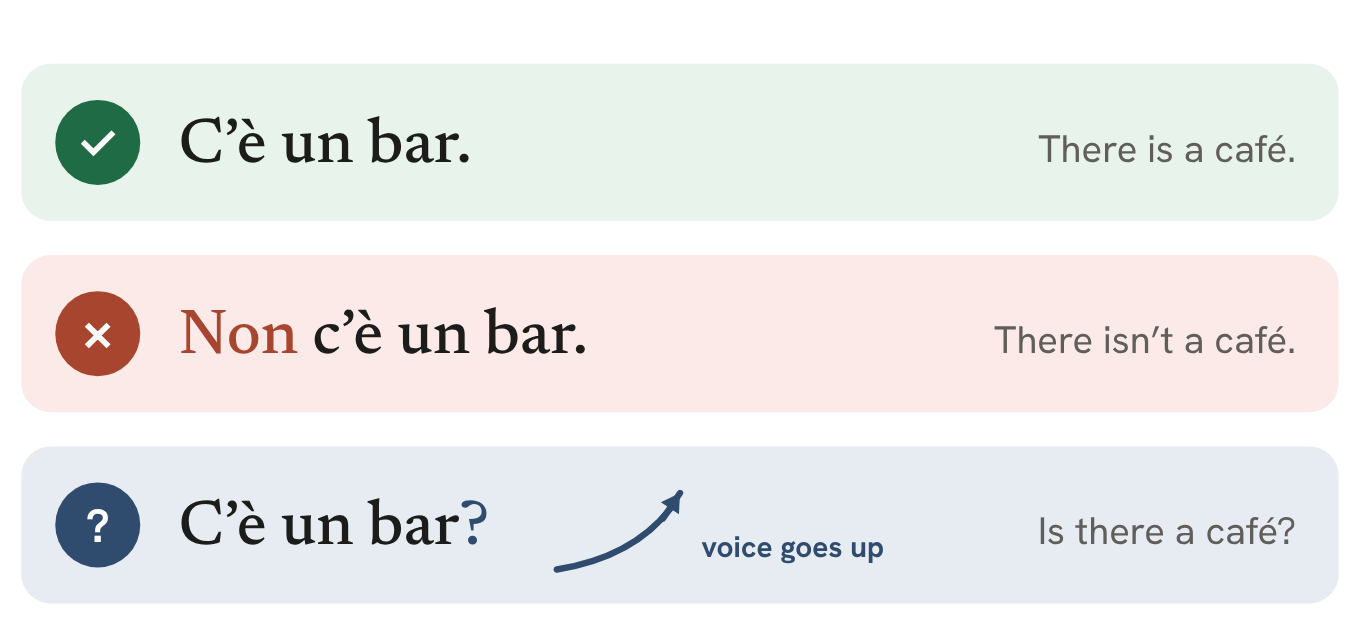
The question is the same sentence. Just raise your voice at the end. Short answers: Sì, c’è or No, non c’è.
❓ You ask
Scusi, c’è una farmacia qui vicino?
SKOO-zee, cheh OO-nah fahr-mah-CHEE-ah kwee vee-CHEE-noh · Excuse me, is there a pharmacy nearby?
💬 They answer
Sì, c’è. ✅
Yes, there is.
No, non c’è. ❌
No, there isn’t.
Plural: Ci sono bar qui vicino? – Sì, ci sono. / No, non ci sono.
Tip: qui vicino (kwee vee-CHEE-noh) = nearby. Add it to any question and you sound like a local.

C’è Marco? Asking for people
On the phone or at the door, c’è asks if a person is there. If not, say where they are with è.

you ask
C’è Marco?
Is Marco there?
Sì, c’è!
Yes, he’s here.
No, non c’è.
È al lavoro.
He’s not here. He’s at work.
C’è Marco?
cheh MAHR-koh
Is Marco there?
AskUn attimo!
oon AHT-tee-moh
Just a moment!
YesNo, non c’è.
noh, nohn CHEH
No, he isn’t here.
NoÈ al lavoro.
EH ahl lah-VOH-roh
He’s at work. (Also: è a casa, he’s at home.)
WhereA phone call in Rome
Luca
Pronto? Ciao, sono Luca. C’è Giulia?
Hello? Hi, it’s Luca. Is Giulia there?

Marta
Ciao Luca! No, non c’è. È al lavoro.
Hi Luca! No, she isn’t. She’s at work.
Luca
E Paolo? C’è?
And Paolo? Is he there?
Marta
Sì, c’è! Un attimo!
Yes, he is! Just a moment!
Spot it: Sì, c’è, never Sì, è. È only comes when you say where the person is.
One more step: c’è or è?
C’è says that something is there. To describe it, Italian switches to è: C’è un parco. Il parco è grande. This difference (and ha, “it has”) has its own short lesson: c’è, è or ha?

1 · something appears
C’è un gatto.
There’s a cat.

2 · you describe it
Il gatto è nero.
The cat is black.
Common mistakes English speakers make
C’è due bar. → Ci sono due bar.
Two = more than one = ci sono.
Ci sono un museo. → C’è un museo.
One museum: c’è.
Non c’è i negozi. → Non ci sono i negozi.
Negozi is plural: ci sono.
Tanti case. → Tante case.
Casa is feminine: tante.
C’è Marco? – Sì, è. → Sì, c’è.
The short answer repeats c’è.
Pronto? and the arches of Bologna
📞 Pronto?
PROHN-toh · Italians answer the phone with Pronto?, literally “ready?”. Then: C’è Giulia?
🏛️ Bologna
In Bologna ci sono about 40 km of porticoes: covered arcades. Since 2021 they are a UNESCO World Heritage Site. Rain? Non c’è problema!

Step 8 · Practice
🍕 Your turn
Start with a quick warm-up, then press Check. Want more? Open the extra exercises below. Mistakes are part of it. No pressure.
Warm-up · 5 questions
C’è or ci sono? One thing or more?
1. ___ un bar in piazza.
2. ___ due musei.
3. Non ___ una farmacia.
4. ___ tanti turisti a Roma.
5. Scusi, ___ una banca qui vicino?
See more exercises · 44 questions ▾Hide the extra exercises ▴
1 · One or more?
Choose c’è or ci sono.
1. In centro ___ una chiesa.
2. In centro ___ tre chiese.
3. A Bologna ___ tanti portici.
4. Qui vicino ___ uno stadio.
5. Non ___ ristoranti italiani.
6. In valigia ___ il passaporto.
7. In valigia ___ due magliette.
8. ___ un parco e un museo.
9. In classe ___ venti sedie.
10. Non ___ problema!
2 · Short answers
Answer with a short answer. The hint in brackets tells you yes or no.
1. C’è una lavagna? (yes)
2. C’è un computer? (no)
3. Ci sono studenti? (yes)
4. Ci sono sedie bianche? (no)
5. C’è un gatto? (no)
6. Ci sono libri? (yes)
7. C’è una pianta? (yes)
8. C’è il mare? (no)
9. Ci sono finestre? (yes)
10. C’è uno stadio? (no)
3 · What do you say?
Read the situation and choose the best line.
1. You need a pharmacy. You ask a stranger:
2. C’è un bar qui vicino? There is one.
3. C’è un museo? There isn’t one.
4. Ci sono ristoranti? Yes, there are.
5. You call your friend’s home and want to talk to Giulia.
6. Someone asks for Paolo. He’s at home, you go to get him.
7. Someone asks for Marco. He isn’t home: he’s at work.
8. Your friend says “Scusa!” for being late. You don’t mind.
4 · Right or wrong?
Is the sentence correct?
1. C’è due farmacie.
2. Ci sono tre musei.
3. Ci sono un museo.
4. Non c’è una banca qui vicino.
5. C’è Marco? – Sì, è.
6. Ci sono tante case.
7. Ci sono un bar e un ristorante.
8. Sì, ci è.
5 · Write it in Italian
Type the sentence. Capital letters and punctuation don’t matter. No accent key? Type an apostrophe (c’e’ = c’è).
1. There is a café.
2. There are two museums.
3. There isn’t a pharmacy.
4. Is there a bank nearby? (polite: start with Scusi)
5. Yes, there is.
6. Is Marco there?
7. No, he isn’t. He’s at work.
8. There are many tourists.
New here? Try a 25-minute lesson for $25: book a trial. Not sure about your level? Take the free level test.
Ci vediamo la prossima settimana! – Sì, alla prossima lezione! Ciao!
See you next week! – Yes, see you at the next lesson! Bye!
Previous lesson: A0 · Final review · Next lesson: A1 · Places in town

Written by Luciana
Native Italian teacher, CEDILS certified, 10,000+ lessons since 2020.